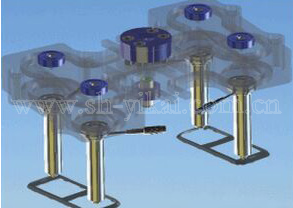
Yisheng Hot Runner mainly produces high-precision and high-quality hot runners for food packaging, daily necessities, auto parts, household appliances, medical equipment and other fields.
Below is the hot runner paper written by our company
Hot runner is a collection of heating components used in injection molds to inject molten plastic into the cavity of the mold.
Chinese Name: Hot Runner
English Name: hot runner
Classification: Open Type, Needle Valve Type
Application Scope: Injection Molds
1. Principle
Hot runner mold is a new structure that heats the sprue and runner of traditional molds or three-plate molds, eliminating the need to take out the runner and sprue during each molding process.
2. Classification
Hot runner systems are divided into fully hot runner (adiabatic runner) and semi hot runner (micro semi-hot runner) systems. The design of adiabatic runners is complex, but they offer excellent performance and very low maintenance costs. Micro semi-hot runner systems simplify the structure, featuring stability, ease of use, low failure rates, and low maintenance costs due to their simple structure, thus providing greater assurance for stable production.
Hot Runner Classification: Open Type (used for micro semi-hot runners), Needle Valve Type (used for adiabatic runners).[1]
Open type has a simple structure, suitable for micro semi-hot runners but not for adiabatic runners. Adiabatic runners have high material limitations, and direct contact with the product surface can easily cause stringing and leakage, resulting in poor surface quality; micro semi-hot runners do not contact the product but connect to micro runners, so open hot nozzles can be used, which are widely applied in high-precision molds abroad.[2]
Needle valve hot runners save materials, ensure beautiful surface of plastic parts, and at the same time provide dense internal quality and high strength. There are two main categories in the world
Needle Valve Hot Runner
Needle valve hot runners (based on injection principle): Pneumatic Cylinder Type and Spring Type. The pneumatic cylinder type relies on a controller and sequence controller to control the closing of the needle valve by pushing the cylinder, with a complex overall structure but simple design of the cylinder itself. Due to structural characteristics, the pneumatic cylinder type requires high mold precision, and debugging and maintenance are relatively complex. It is widely used in household appliances, auto trim parts, precision multi-cavity molds.
1. For molding oversized products:
Preform molds using hot runners
Hot runners are necessary for plastic flow ~ such as: automotive interior panels, balance bars, ... etc., which require multiple simultaneous or sequential gating points.
2. Side gating offset from the center of the injection molding machine:
Gating with hot runners simplifies mold structure, facilitates molding, speeds up molding cycle, reduces sprue during molding, saves raw material costs...... achieving multiple benefits at once.
3. Used when gating from the ejection side or requiring a long sprue:
Eliminates problems caused by too long sprues, such as: reduced mold stroke, saved sprue residue, easier molding, no shrinkage, no flow marks...... etc.
4. For some large products or products allowing central gating:
(1) Hot runners can replace three-plate molds to avoid unnecessary movement of molding machine templates.
(2) In three-plate mold applications, the female template must be moved to remove the sprue. With hot runner molding, the mold opening stroke can be shortened to the movement necessary for removing the sprue, thus increasing mold thickness. For products that originally required large molding machines with traditional methods, small molding machines can be used after adopting hot runners.
5. Difficult-to-mold parts:
For example: high viscosity, low viscosity, high molding temperature...... Hot runner systems can solve these problems.
Specific examples: metal powder injection molding, ceramic powder injection molding, plastic magnet injection molding, plastic bearing injection molding, thermoplastic elastomer (TPE)...... etc.
6. Can be combined with three-plate mold design to reduce the stroke required for sprue removal:
Applying hot runners in three-plate molds has the following advantages:
(1) The sprue is easy to remove, and the stroke for sprue removal can be reduced.
(2) The material flow during injection is more uniform, and the operating conditions of each injection point can be controlled separately, making injection easier.
(3) Saves material costs.
7. Saves material costs and labor costs:
(1) Costs incurred by cold sprues (interest loss).
A simple example: If cold sprues account for 68% of the waste rate (1kg of material can only produce 320g of products during manufacturing, while the remaining 680g is cold sprues).
(2) Although cold sprues can be recycled, due to labor factors, mixing ratio of recycled materials...... and other factors, it is necessary to stockpile some cold sprues to maintain normal operation, resulting in capital backlog.
If the material cost is 100 CNY/kg and the stockpiled waste is 500kg, the daily capital backlog will be as high as 500×0.68×100=34000 CNY, so the interest loss is about 200 CNY per day, which is a considerable amount in the long run.
8. For high-speed injection molding:
High-speed injection molding not only improves molding efficiency but also is indispensable for molding thin-walled products such as cups, containers...... etc.
9. When using stack molds:
For some thin and high-volume products, such as: CD cases, small granular products, only a 15% increase in clamping force is needed to increase output by 80% with the same injection time.
10. Environmental and efficiency issues:
Since hot runners do not produce "waste", there is no problem of disposing "waste".
The so-called "waste" means:
(1) Waste of resources: Analyzing the plastic injection molding process ──
(2) No storage space for sprues, no noise from crushing and no deterioration issues.
Due to the wide variety of plastics and different colors, stockpiling sprues often occupies a lot of space on valuable land and ties up a lot of capital.
At the same time, crushing produces noise affecting tranquility, and poor working environment affects work morale.
A hot runner system generally consists of hot nozzles, manifold, temperature control box and accessories. Hot nozzles generally include two types: open hot nozzles and needle valve hot nozzles. Since the type of hot nozzle directly determines the selection of hot runner system and mold manufacturing, hot runner systems are often divided into open hot runner systems and needle valve hot runner systems accordingly. Manifolds are used in multi-cavity molds, multi-point gating, or single-point gating with offset gate positions. The temperature control box includes main unit, cables, connectors, male and female sockets for wiring, etc. Hot runner accessories usually include: heaters and thermocouples, runner seals, connectors and junction boxes, etc.
Generally speaking, hot runner systems are divided into single-head hot runner systems, multi-head hot runner systems and valve gate hot runner systems. A single-head hot runner system mainly consists of a single nozzle, nozzle tip, nozzle adapter plate, temperature control system, etc.
The structure of plastic molds with single-head hot runner systems is relatively simple. Molten plastic is injected from the injection molding machine into the nozzle adapter plate, reaches the nozzle tip through the nozzle, and then is injected into the cavity. It is necessary to control the dimensions d, D, L and adjust the thickness of the nozzle adapter plate to make the fixed mold clamping plate press against the end face of the nozzle adapter plate to control the axial displacement of the nozzle, or directly use the injection molding machine nozzle to press against the end face of the nozzle adapter plate to achieve the same purpose. A wire groove is set at an appropriate position on the fixed mold clamping plate to lead the power cord out of the mold and connect it to the terminal block installed on the mold.
The structure of plastic molds with multi-head hot runner systems is relatively complex. Molten plastic is injected from the injection molding machine into the nozzle adapter plate, flows through the hot runner plate to the nozzle, reaches the nozzle tip, and then is injected into the cavity. The nozzle of the hot runner system has radial dimension D1 matching requirements and axial dimension limiting requirements with the fixed mold plate. The nozzle tip has radial dimension d matching requirements with the fixed mold insert to ensure that molten plastic does not overflow to non-cavity parts, and the hardness of the fixed mold insert is required to be quenched to about 50HRC. The distance L between the parting surface and the axial positioning surface of the hot nozzle must be strictly controlled. This dimension should be determined based on the actual distance L' of the nozzle at room temperature plus the actual extension ΔL of the nozzle at the normal working temperature of the mold. To ensure reliable fitting between the nozzle and the hot runner plate and prevent deformation of the hot runner plate, an adjusting pad is set above the top of the nozzle. Together with the axial positioning surface of the nozzle itself, the adjusting pad limits the axial movement of the nozzle and effectively controls possible deformation of the hot runner plate. At room temperature, a 0.025mm gap is controlled between the adjusting pad and the hot runner plate and fixed mold clamping plate so that the adjusting pad is just pressed tightly at the working temperature after the mold is heated. The positioning seat and dowel pin of the hot runner system control the position of the hot runner plate in the mold together. The positioning seat has radial dimension D2 matching requirements with the fixed mold plate, and the depth h must be accurately controlled. The axial direction of the positioning seat supports the hot runner plate and directly bears the injection pressure of the injection molding machine. The dowel pin has matching requirements with the hot runner plate clamping plate. Sufficient clearance must be left between the hot runner plate and the mold plate to wrap thermal insulation materials. The hot runner plate and clamping plate must be provided with sufficient wiring grooves to lead the power cord out of the mold and connect it to the terminal block installed on the mold. The nozzle adapter plate has radial dimension D1 matching requirements with the fixed mold clamping plate to ensure good cooperation between the injection head of the injection molding machine and the nozzle adapter plate on the mold. Near the hot runner plate, the fixed mold plate, hot runner plate clamping plate and fixed mold clamping plate are connected with screws to enhance the rigidity of the hot runner plate.
The structure of plastic molds with valve gate hot runner systems is complex. It has the same structure as ordinary multi-head hot runner system plastic molds, and additionally has a set of valve pin transmission device to control the opening and closing movement of the valve pin. The transmission device is equivalent to a hydraulic cylinder, which is connected with the mold using the hydraulic device of the injection molding machine to form a hydraulic circuit, realizing the opening and closing movement of the valve pin and controlling the injection of molten plastic into the cavity.
First, determine the gate position according to the plastic part structure and usage requirements. As long as the plastic part structure permits, and the nozzle and nozzle tip in the fixed mold insert do not interfere with the molding structure, the gate of the hot runner system can be placed at any position on the plastic part. The gate position for conventional plastic part injection molding is usually selected based on experience. For large and complex special-shaped plastic parts, the gate position for injection molding can use computer-aided engineering (CAE) to simulate the flow of molten plastic in the cavity, analyze the cooling effect of various parts of the mold, and determine the ideal gate position.
Second, determine the nozzle tip type of the hot runner system. The plastic material and product usage characteristics are the key factors for selecting the nozzle tip type, and the production batch of plastic parts and mold manufacturing cost are also important factors for selecting the nozzle tip type.
Third, determine the number of cavities per mold according to the production batch of plastic parts and the tonnage of the injection equipment.
Fourth, determine the number of nozzles based on the determined gate position and the number of cavities per mold. If molding a product with one cavity and one gate per mold, only one nozzle is needed, i.e., a single-head hot runner system is selected; if molding a product with multi-cavity per mold or more than two gates per cavity, multiple nozzles are needed, i.e., a multi-head hot runner system is selected, except for mold structures with cross runners.
Fifth, determine the radial size of the nozzle according to the weight of the plastic part and the number of nozzles. Nozzles of the same type have multiple size series to meet the molding requirements of plastic parts within different weight ranges.
Sixth, determine the mold structure size according to the plastic part structure, then select the standard length series size of the nozzle according to the thickness of the fixed mold insert and fixed mold plate, and then trim the thickness of the fixed mold plate and other dimensions related to the hot runner system.
Seventh, determine the shape of the hot runner clamping plate according to the shape of the hot runner plate, arrange the power cord lead groove on the plate, and design sufficient cooling water circuits near the hot runner plate, nozzle and nozzle tip.
Eighth, complete the drawing of the plastic mold design with hot runner system.
Ninth, a mature hot runner system must consider the matching degree between the hot runner system and the plastic mold, i.e., the design of the hot half mold. The hot half mold refers to the precision hot runner system processed by professional hot runner manufacturers for customers, which has the characteristics of simple and convenient maintenance, high matching precision, and fast processing.. Reduce injection pressure and clamping force.
An important step in hot runner is the hot runner design concept. A detailed design concept, including manifold and pressure plate, will become an important part of the mold review.
Manifolds are used to ensure that the melt channels can be arranged in an effective way. Ideally, the melt channels are designed symmetrically, with all down runners having the same flow length and number of turns. In the case of multi-cavity molds or asymmetric molds, the melt channels may include artificial lengths and turning points to properly balance the system. This concept helps both designers and hot runner designers to ensure the best manifold design.
For a part requiring 3 gates, to control the weld line on the part, the problem of plastic flow balance must be solved. Through a detailed manifold design, the flow balance and manifold layout can be evaluated to ensure that the down runners can meet the needs of the customer's mold base. The final result is to combine a single direct gate with two hot-to-cold gates on a single-cavity mold.
In addition, pressure plate technology must be adopted to ensure that the closed height and key features required by the customer can be designed. Since the hot runner nozzle is included in the nozzle, the mold designer must also confirm whether the gate access and cooling can meet the requirements of the hot runner manufacturer.
The main factors for evaluating hot runners include: flow balance and manifold heat distribution; channel size; manifold material strength in high-pressure applications; gate size; cooling and gate access; components that can withstand abrasive and corrosive resins.
Hot runner is a complex mold part with certain advantages. In mold production projects, CAE computer-aided engineering analysis, resin testing and design concepts can all be completed by hot runner suppliers. If hot runner suppliers are involved in the early stage of a project, the designers can further optimize the final product.
1. Manifold
2. Nozzle
3. Temperature Controller
4. Auxiliary Parts
A successful hot runner mold application project requires multiple links to be guaranteed. Among them, there are two important technical factors. One is the control of plastic temperature, and the other is the control of plastic flow.
1. Control of Plastic Temperature
The control of plastic temperature is extremely important in the application of hot runner molds. Many processing and product quality problems occurring in the production process
are directly caused by poor temperature control of the hot runner system. For example, poor gate quality of products when using hot pin gate injection molding, difficult closing of valve pins when using valve gate molding, inconsistent filling time and quality of parts in multi-cavity molds, etc. If possible, try to select a hot runner system with separate temperature control for multiple zones to increase the flexibility and adaptability of use.
2. Control of Plastic Flow
Plastic must flow balanced in the hot runner system. The gates must open simultaneously to allow plastic to fill each cavity synchronously. For FAMILYMOLD with significantly different part weights, runner size design balance must be carried out. Otherwise, some parts will have insufficient filling and holding pressure, while others will have excessive filling and holding pressure, resulting in excessive flash and poor quality. The runner size design of hot runners must be reasonable. Too small size will cause excessive filling pressure loss. Too large size will result in excessive hot runner volume, and plastic will stay in the hot runner system for too long, damaging material properties and leading to parts that cannot meet usage requirements after molding. There are already CAE software such as MOLDCAE in the world that specifically help users with optimal runner design.
1. Types of Plastic Materials
Hot runner molds have been successfully used to process various plastic materials. Such as PP, PE, PS, ABS, PBT, PA, PSU, PC, POM, LCP, PVC, PET, PMMA, PEI, ABS/PC, etc. Any plastic material that can be processed with cold runner molds can be processed with hot runner molds.
2. Part Size and Weight
The smallest parts manufactured with hot runner molds are below 0.1 grams. The largest ones are over 30 kilograms. The application is extremely extensive and flexible.
3. Industrial Fields
Hot runner molds are widely used in various industrial sectors such as electronics, automotive, medical, daily necessities, toys, packaging, construction, office equipment, etc.
6. Leakage Treatment
Most leakage cases are not due to poor system design, but to failure to operate in accordance with design parameters. Leakage usually occurs at the seal between the hot nozzle and the manifold. According to general hot runner design specifications, there is a rigid edge at the hot nozzle to ensure that the height of the hot nozzle assembly is less than the actual groove depth on the hot runner plate. The purpose of designing this dimensional difference (usually called cold gap) is to avoid damage to components due to thermal expansion when the system is at operating temperature.
1. The back of the hot nozzle is fixed on the manifold; high-temperature bolts fixing the hot nozzle on the manifold can prevent leakage under cooling conditions. This system still requires a cold gap because the rigid edge needs a certain expansion space at room temperature. Although this method can actively prevent leakage from the hot nozzle to the manifold, it cannot prevent thermal expansion of components under overheating conditions.
2. The hot nozzle fixed on the manifold by bolts moves together with the manifold. This design has minimum length requirements for the hot nozzle and restrictions on cavity spacing. It is an economical and effective way to prevent leakage between the hot nozzle and the manifold, suitable for systems with a small number of cavities.
3. The hot nozzle edge adopts an elastic rather than rigid design. The elastic edge provides preload under cooling conditions and prevents system damage. If accidental overheating occurs, it can also absorb thermal expansion, expanding the operating range to ±110℃.
7. Characteristic Introduction
The injection molding process is an engineering of (plasticization) → (flow) → (molding) → (solidification and crystallization).
Therefore, the characteristics of plastics are particularly important. For example: melting temperature, pressure, viscosity, specific heat...... etc. must be taken seriously. Since the field of plastics is very broad, it is impossible to go into details here, but we will explain the common sense part.
The reason why plastics can be molded and processed is that they deform under the action of temperature and pressure. According to different heating temperatures, they can be divided into four states, namely glassy state, high elastic state (rubbery state), viscous flow state (plasticized state), and decomposition state, as shown in the figure:
Glassy state: 0~T1, molecules are in a frozen state, hard and brittle, and easy to break under pressure.
High elastic state (rubbery state): T1~T2, deformable by external force, not easy to mold without reaching melting state.
Viscous flow state (plasticized state): T2~T3, can be processed and molded at will.
Decomposition state: T3, plastic begins to crack, gas decomposition products appear, and even charring occurs.
(Note) The following are molding conditions for general plastics
For each different plastic, its relative molding area may be different, but the process analysis is the same. Therefore, for excellent mold designers, they should clearly understand the molding area and processing characteristics of each plastic.[3]
The flow state of general fluids (such as water, oil......) follows Newton's definition. Although plastic melt looks like an ordinary fluid, it is actually a non-Newtonian fluid. For example: in Newtonian fluids, although the shear stress changes, the viscosity remains unchanged. In plastic melts, when the shear stress changes, the viscosity also changes significantly. For example: in Newtonian fluids, when the pressure increases from 1 to 10, the outflow increases by 10 times. Doing the same experiment with plastic melt, when the pressure increases from 1 to 10, the outflow may increase by 100 times, 500 times, or even 1000 times (depending on different plastics).
Therefore, in this non-Newtonian flow, the increase in pressure reduces the flow resistance. Therefore, during injection molding, although the gate is quite narrow, it is easy to fill the mold cavity. As for Newtonian fluids, they can be further classified into two types, as shown in the figure:
Injection molding is a processing method that deforms plastic solution at high speed. Due to the compressibility of plastic solution, elastic pressure changes are likely to occur under high-speed flow. This phenomenon can be seen when the flow resistance changes rapidly. After this elastic pressure change occurs, the diffusion direction of the fluid front is extremely chaotic and unstable. However, when filling at high speed, the plastic solution behaves as if it is incompressible. What causes this elastic pressure change (unstable pulsation)? The analysis is as follows as shown in the figure:
[When the flow of plastic solution is similar to laminar flow state, i.e., the mold cavity is filled under normal and stable conditions]
In the figure, the compressible plastic solution is represented by a spiral spring. Imagine applying pressure to the spring to move it to the center of the tube. When moving the spring from left to right at the same speed, this is an ideal laminar flow state. Since the injection pressure and resistance are in a balanced state, the movement of the spring is very smooth. [As shown in C]
However, in some cases, rapid filling is necessary, so the injection pressure and speed increase abnormally. Therefore, the elastic plastic solution (spring) is compressed excessively at the first moment, and strong resistance is caused at the second moment. The reason is the fluctuation of pressure and turbulence at the front of the fluid. This flow condition is called elastic turbulence.
Selection of Plastic Materials:
Plastics should be selected at the beginning of product design, but molds are mostly not considered. However, if possible, the selected materials should simplify mold manufacturing.
Materials with small molding shrinkage (PS, ABS, PC) are easier to achieve dimensional accuracy. Materials with large molding shrinkage (PP, PE, POM) are more difficult to achieve dimensional accuracy (mold tolerance is 1/6 of the molded product tolerance).
Materials with high viscosity during flow (such as ABS) make it difficult for the solution to flow into gaps, while materials with low viscosity (such as PA, POM) can easily enter even small gaps.
Materials with low molding temperature (such as PS) are easier to mold and have a fast molding cycle, while materials with high molding temperature (PC) are slower.
Materials that are not easy to deteriorate or decompose during molding (PS, PE, PP, etc.) are not easy to cause defective products with unstable quality during mass production, but materials that are prone to deterioration or decomposition during molding cannot be mass-produced without strictly requiring molding conditions (molds can precisely control molding conditions). This problem is particularly serious in the case of hot runners.
Crystalline Plastics and Amorphous Plastics
From the perspective of molecular structure, crystalline plastics - linear polymers, according to their chemical structure, some parts of the molecules are regularly aggregated, which are called crystalline plastics. Not all molecules are in this state. Depending on cooling conditions, about 40~80% by weight becomes crystalline state. This degree is called "crystallinity". Inside the crystals are molecular chains called Lamella that bend and fold, and molecular chains that do not enter the crystalline part producing unit crystals exist between Lamella or spherulites, producing amorphous parts. Amorphous plastics...... Unlike crystalline plastics, molecules cannot aggregate regularly. This is because the atomic groups forming the polymer chain are too large and cross-linking hinders crystallization.
From the observation results of volume change, thermoplastics can also be divided into two categories: amorphous plastics and crystalline plastics. For the classification of crystalline and amorphous, the habits of various plastics have been indicated in the table. For the change between their volume and temperature, we can further understand through the following examples. For example: PS (representative of amorphous plastics) expands by about 8.3% when heated from 20℃ to 200℃, and in terms of density, it decreases from 0.97 cm/g to 1.012 cm/g (representative of crystalline plastics) has the following changes under the same conditions:
Volume at 20℃: 1.03 cm/g
Volume at 200℃: 1.33 cm/g
Volume increase rate: 29%
Molten amorphous polymers can be greatly compressed using the injection molding machine used. Depending on the conditions, excess melt can also be forcibly filled into the mold cavity. Under such conditions, the molded products solidify with large residual stress. It has a great impact on the performance of molded products. It may be damaged at the moment of demolding, and is also easily damaged by slight external force or chemical action.
Crystalline plastics, when heated to completely melt the crystals, the melt becomes amorphous, and its behavior is the same as that of amorphous polymers. It is worth noting that when the pressure increases, the transition temperature from crystalline to amorphous also increases. When molding crystalline plastics, one important point in the quality of molded products is that the polymer must complete the molding action in the amorphous state. This is especially true for the holding pressure period, as the deformation during holding pressure is caused by flow.
After rapid cooling of the melt of crystalline plastics, recrystallization of some parts of the molded product is hindered. The recrystallization phenomenon cannot be completed instantly but continues at any time. There is a direct relationship between density and the degree of crystallization. The higher the degree of crystallization, the higher the density. On the contrary, the lower the degree of crystallization, the lower the density. The parts where recrystallization is hindered due to rapid cooling continue to undergo post-crystallization more or less due to differences in temperature and time factors. Post-crystallization continues until the density of this part is restored to the original. Therefore, it can be understood that post-crystallization is related to post-shrinkage, and post-crystallization and post-shrinkage are also the causes of warpage deformation and dimensional change (shrinking of molded products) of molded products.
If the mold cavity surface temperature is high, the molding shrinkage is initially large, but there is little change during heat treatment. Therefore, molded products made at a very high mold surface temperature have good dimensional stability even when used at high temperatures. Therefore, when determining the mold cavity size of crystalline plastics, the relationship between post-crystallization and post-shrinkage must be considered, and importantly, the mold cavity surface temperature must be accurately grasped from the beginning of molding. Of course, it is impossible to completely eliminate temperature differences on the mold cavity surface, but an effective temperature control system can be used to minimize temperature differences.
Usually, increasing the mold temperature will shrink and reduce the product size, but it is not absolute. Sometimes it is found that increasing the mold temperature will increase the size instead. Ultimately, it depends on the actual molding effect.
Hot runner molds are widely used in all industrial developed countries and regions in the world today. This is mainly because hot runner molds have the following significant characteristics:
1. Shorten part molding cycle
Because there is no limitation of cooling time of the sprue system, the parts can be ejected immediately after molding and solidification. The molding cycle of many thin-walled parts produced with hot runner molds can be less than 5 seconds.
2. Save plastic raw materials
In pure hot runner molds, there are no cold sprues, so no production waste is generated. This is particularly significant for application projects with expensive plastic prices. In fact, major international hot runner manufacturers have developed rapidly in the era of expensive oil and plastic raw materials in the world. Because hot runner technology is an effective way to reduce waste and material costs.
3. Reduce waste products and improve product quality
In the molding process of hot runner molds, the temperature of plastic melt is accurately controlled in the runner system. Plastic can flow into each cavity in a more uniform state, resulting in parts with consistent quality. Parts molded with hot runners have good gate quality, low residual stress after demolding, and small part deformation. Therefore, many high-quality products on the market are produced with hot runner molds. For example, many plastic parts in well-known products such as MOTOROLA mobile phones, HP printers, and DELL laptops are made with hot runner molds.
4. Eliminate subsequent processes and facilitate production automation.
Parts are finished products after molding with hot runner molds, eliminating processes such as trimming gates and recycling cold sprues. Conducive to production automation. Many foreign product manufacturers have combined hot runners with automation to greatly improve production efficiency.
5. Expand the application scope of injection molding process
Many advanced plastic molding processes are developed on the basis of hot runner technology. Such as PET preform production, multi-color co-injection in molds, multi-material co-injection processes, STACK MOLD, etc.
Although hot runner molds have many significant advantages compared with cold runner molds, mold users also need to understand the disadvantages of hot runner molds. Summarized as follows.
1. Increased mold cost
Hot runner components are relatively expensive, and the cost of hot runner molds may increase significantly. If the part output is small, the proportion of mold tooling cost is high, which is not economically viable. For mold users in many developing countries, the high price of hot runner systems is one of the main problems affecting the widespread use of hot runner molds.
2. High requirements for hot runner mold manufacturing process and equipment
Hot runner molds require precision processing machinery as a guarantee. The integration and cooperation between the hot runner system and the mold are extremely strict, otherwise, many serious problems will occur during mold production. For example, poor plastic sealing leading to plastic overflow damage to hot runner components and interruption of production, poor relative position between nozzle insert and gate leading to serious decline in product quality, etc.
3. Complex operation and maintenance
Compared with cold runner molds, hot runner molds are complex to operate and maintain. For example, improper use can easily damage hot runner parts, making production impossible and causing huge economic losses. For new users of hot runner molds, it takes a long time to accumulate experience in use.
Many conditions are factors to consider when selecting hot nozzles, such as: different plastic characteristics, shape, size, thickness, weight of products, cavity arrangement and gate position. We have several types of hot nozzles and manifold plates of different shapes and sizes to adapt to various products.
Hot runner is a method of keeping the plastic in the runner and gate in a molten state by heating. Since heating rods and heating coils are installed near or in the center of the runner, the entire runner from the outlet of the injection molding machine nozzle to the gate is in a high-temperature state, keeping the plastic in the runner molten. Generally, it is not necessary to open the runner to take out the condensate after shutdown, and only need to heat the runner to the required temperature when starting up again. Therefore, the hot runner process is sometimes called a hot manifold system, or runnerless molding.
Advantages and Disadvantages of Hot Runner Technology
1. Save raw materials and reduce costs.
2. Shorten molding cycle and improve machine efficiency
3. Improve surface quality and mechanical properties of products.
4. Can use pin gates without three-plate molds.
5. Can economically mold single products with side gates.
6. Improve automation level.
7. Can use needle valve gates to control gate freezing.
8. Consistent quality of injection parts in multi-cavity molds.
9. Improve the surface aesthetics of injection products.
10. Can use lower injection pressure, which can effectively reduce post-deformation of thin-walled products.
However, every technology has its own disadvantages, and hot runner technology is no exception:
1. Complex mold structure, high cost, and high maintenance cost.
2. It takes some time for the process to stabilize when starting up, resulting in more waste products at the beginning.
3. When melt leakage and heating element failure occur, it has a great impact on product quality and production schedule.
The third disadvantage mentioned above can be reduced by purchasing high-quality heating elements, manifold plates and nozzles and carefully maintaining them during use.
Technical Issues in Selecting and Purchasing Hot Runner Systems
Users will involve many specific technical links when selecting and purchasing hot runner systems. If users have good technical knowledge related to hot runners, it is easy to select and purchase a suitable hot runner system to ensure smooth subsequent injection production and improve product quality.
1. Correct Selection of Hot Runner Product Series
Hot runner suppliers often manufacture their hot runner components into product series according to the size and weight of processed plastic parts. For example, large plastic parts are processed with large-size nozzles, and small plastic parts are processed with small-size nozzles. Therefore, after users correctly select the type of hot runner (i.e., select hot tip or valve type system), they need to select the hot runner product series. This determines the structural size and design and manufacture of the mold. If the hot runner product series is selected incorrectly, it will be discovered in the later stage of mold processing or during plastic part production, and the error is very serious and difficult to remedy. To help correctly select the hot runner product series, each hot runner supplier has some guiding technical documents for reference. Users should closely cooperate with hot runner suppliers to select a good hot runner product series.
2. Injection Pressure Loss in Hot Runner Systems
The injection pressure loss in hot runner systems cannot be ignored. Many hot runner mold users have a misunderstanding that compared with cold runners, the injection pressure loss of hot runners is much smaller. The reason is that the plastic melt in the hot runner is always hot throughout the injection process. In fact, in many cases, the situation is just the opposite. In hot runner molds, due to the structural design requirements of hot runners, the flow distance of the melt in the hot runner system is greatly increased. Therefore, the injection pressure loss in the hot runner system is often large. In practical applications, there are many cases where injection molding is difficult due to excessive injection pressure loss in the hot runner system. Therefore, for processing plastics with poor fluidity (such as PC, POM, etc.), large flow distance of melt in the hot runner system, or large part weight, CAE software should be used for runner analysis and calculation. CAE software focusing on runner analysis and calculation includes MoldCAE, etc.
3. Standard and Non-Standard Hot Runner Systems
Each hot runner manufacturer provides both standard and non-standard hot runner systems. If possible, users should choose standard hot runner systems as much as possible. That is, choose nozzles, manifold plates, gate inserts, etc. with standard lengths and dimensions as much as possible. The advantage is that standard hot runner systems are cheaper than non-standard ones and have a much shorter delivery time. Moreover, parts are interchangeable, which is conducive to future use and maintenance. Once a part is damaged, another standard part can be purchased and installed. Common shapes of standard manifold plates include 2 cavities in a row, 4 cavities in a row, 8 cavities in a row, 4 cavities in X shape, 8 cavities in XX shape, etc.
4. Selection of Number and Layout of Cavities on the Mold
When designing hot runner molds and selecting the number of cavities, in addition to placing as many cavities as possible to improve production efficiency, users should also consider the design of hot runners. The selection of the number and layout of cavities on the mold should be conducive to the flow balance of plastic melt in the hot runner system. For example, if several cavities of the same shape are arranged in a row, it is better to select 2 or 4 cavities instead of 3. Because for molds with 2 or 4 cavities in a row, the hot runner can be designed as a completely naturally balanced system. On the contrary, molds with 3 cavities require artificial flow balance of the hot runner manifold. That is, different runner sizes are used for different flow paths on the hot runner manifold to try to achieve flow balance. The quality of flow balance depends on the work quality of specific hot runner designers. Therefore, users should choose the number of cavities conducive to flow balance as much as possible (such as selecting 16 cavities instead of 15 cavities, etc.) to eliminate any mistakes caused by artificial design of flow balance.
5. Limitations of Small Cavity Distance
When designing molds for producing micro parts, people generally hope to arrange the cavity distance as close as possible, so that the mold can be more compact and more cavities can be placed. However, the small cavity distance is limited by the minimum distance between hot runner components such as nozzles. Therefore, when designing molds with very close cavity distances, users should check the minimum allowable nozzle distance to avoid rework of mold design.
6. Types of Processed Plastics
The type of processed plastic is a very important consideration factor when selecting a hot runner system. If processing glass-reinforced plastics (such as glass-reinforced nylon materials, etc.), gate inserts with good wear resistance should be selected. If processing plastics that are easy to thermally decompose (such as PVC), a hot runner system with unobstructed runners and no flow dead ends should be selected. If processing plastics with poor fluidity (such as PC), consideration should be given to selecting a larger nozzle series and using a larger runner cross-sectional size in the manifold plate.
7. Maturity of Hot Runner Products
The maturity and application history of each hot runner product are different. A newly launched hot runner product takes a long time to be gradually improved. While continuously introducing new products, hot runner manufacturers will also eliminate hot runner products that are proven inappropriate through practice. Therefore, users should choose hot runner products with good maturity, popularity and long application history as much as possible. For such products, both hot runner manufacturers and other hot runner users have more experience and successful cases to reference for new users with little experience.
8. State of Hot Runner System Before Delivery
Some hot runner suppliers will conduct certain tests on the system before delivering their hot runner systems to users. For very important application projects, actual injection molding experiments may even be carried out. But the test scope of each hot runner supplier before delivery of the hot runner system is different. Users should understand this to be aware of the situation.
9. Multi-Zone Temperature Control of Hot Runners
If users need to purchase large and complex hot runner systems, or process plastics that are sensitive to temperature and have narrow processing parameter ranges, they should choose a hot runner design scheme with separate temperature control for multiple zones. In this way, users can locally adjust and control the temperature distribution as needed. An ideal hot runner system should have a uniform temperature distribution. But in fact, there are many reasons leading to different temperatures in various parts of the hot runner. Such as the quality of hot runner heating elements, excessive heat loss at the junction between the hot runner system and the mold, different shear heat of plastic melt in various parts of the hot runner, etc. The larger and more complex the hot runner system is, the more it should choose a hot runner system with multi-zone temperature control.
10. Application Projects with Color Change Requirements
Some users produce the same type of plastic parts with different colors using the same mold, which is an application project with color change requirements. When ordering hot runners, users should choose hot runner systems with small runner volume as much as possible to accelerate the color change process and reduce waste. At the same time, any runner turning in the hot runner system must be rounded and smooth without flow dead ends. If valve hot runner systems are used to produce plastic parts with color change requirements, there are often flow dead ends (DEAD SPOT) behind the valve pins, which must be given special attention.
11. Multi-Cavity Molds with Different Shapes in One Mold
When designing multi-cavity molds with different shapes in one mold, the flow balance problem must be considered. If the part size and weight differ too much, and the injection pressure difference between each cavity is more than 200-300BAR, it is difficult to achieve flow balance by changing the runner size in the hot runner system. If the flow is unbalanced in a multi-cavity mold with different shapes in one mold, some parts will have insufficient filling and holding pressure, while other parts will have excessive filling, large flash and high residual stress. At this time, consideration should be given to using a valve hot runner system or changing the overall mold design scheme. The valve system allows users to close the gates of cavities that are filled early at an appropriate time to avoid over-filling of these cavities.
12. Proportional Relationship Between Cavity and Hot Runner Volume
Compared with the cavity volume, the runner volume of the hot runner system should not be too large. Otherwise, the plastic melt will stay in the hot runner system for too long, causing thermal decomposition and unable to produce qualified plastic parts. If the weight of plastic parts is too small, a combined hot and cold runner scheme should be adopted. The use of cold runners increases the injection volume, which helps improve the proportional relationship between the cavity and hot runner volume and shorten the residence time of plastic melt in the hot runner system.
13. Use of Trial Molds
Hot runner molds are relatively expensive, especially hot runner molds with a high number of cavities (such as 96, 128 cavities, etc.), which are even more expensive. If it is to open up a new application field with insufficient experience, or try to use newer hot runner components (such as nozzles or new gates), consideration should be given to first making a simple single-cavity trial mold to verify the feasibility of the scheme. After gaining sufficient experience, then make the expensive official working mold.
14. Drawing of Hot Runner Components on Mold Drawings
Hot runner suppliers generally make their hot runner components into electronic drawing libraries for users to use. When designing and drawing mold drawings, mold designers can select the required nozzle and other component drawings from the hot runner component electronic drawing library and place them at appropriate mold positions. Since hot runner suppliers often update and upgrade their hot runner products, users should pay attention to continuously obtaining new drawing libraries from hot runner manufacturers. Although people have begun to design molds using 3D methods, the electronic drawing libraries of hot runner components from various hot runner suppliers are mostly 2D. Some manufacturers have begun to establish 3D hot runner component drawing libraries to adapt to the development of 3D mold design
15. Handling of Product Gate Position
As a plastic melt molded product, the gate position is inevitably present in hot runner products during production. When users choose hot runner companies to design and produce products, they need to fully communicate with the technical personnel of hot runner manufacturers. The cost of hot runner nozzles (flat nozzles, pointed nozzles, multi-head nozzles, needle valve nozzles, etc., with large price differences) accounts for an important part of the hot runner system. Choosing and designing a suitable hot nozzle is very important for the ideal operation of the entire system in the design process. On the one hand, it can control costs and select a suitable hot nozzle according to actual conditions; on the other hand, it can reduce the probability of secondary design during production and use.
This paper is a brief overview of the years of experience and skills of our company.